The Book of Revelation was not written about our future. It was written about John's present. The beast with the number 666 was not a future world leader with a microchip. He was a man already on the throne when John wrote — a man whose name, calculated in Hebrew gematria, produces the number exactly. His name was Nero Caesar.
Revelation 13:18 — "Let the person who has insight calculate the number of the beast, for it is the number of a man."
Revelation was written in a genre called apocalyptic literature — a genre that Jewish and early Christian audiences understood perfectly and modern Western readers have almost entirely forgotten how to read. Apocalyptic literature uses symbolic numbers, coded names, and layered imagery to communicate politically dangerous truths to an in-group audience while concealing them from hostile authorities. John was not being obscure for the sake of mysticism. He was protecting his readers from the Roman government that was already executing Christians. He was writing about Rome. He was writing about Nero. And he gave his readers — who knew how to calculate — the key to decode it.
The instruction in Revelation 13:18 is precise: calculate the number. This is an active verb. John is not presenting a mystery — he is presenting a puzzle with a known solution, for those who knew how to solve it. The solution has been known by preterist scholars for centuries. The number 666 is the Hebrew gematria value of the name Nero Caesar, transliterated from Greek into Hebrew. This was not a difficult calculation for a first-century Jewish Christian. It was immediately obvious.
Greek: Νέρων Καίσαρ — Neron Kaisar — transliterated into Hebrew produces: נרון קסר. In Hebrew gematria each letter has a numerical value. John's instruction to "calculate" is the instruction to do this arithmetic. Every first-century Jewish Christian reader who knew both Greek and Hebrew would have done this calculation immediately and recognised the name without hesitation.
50 + 200 + 6 + 50 + 100 + 60 + 200 = 666 · Nero Caesar · Reigning Emperor of Rome · 54–68 AD
The confirmation that this calculation is correct comes from an unexpected source: some early manuscripts of Revelation give the number of the beast as 616 rather than 666. This is not a scribal error — it is the same calculation performed with a slightly different transliteration of Nero's name into Hebrew, omitting the final N of Neron. Both 616 and 666 calculate to Nero Caesar. Two variants of the same calculation, both pointing to the same man. The manuscript variants are the double confirmation that the identification is correct.
"This calls for wisdom. Let the person who has insight calculate the number of the beast, for it is the number of a man. That number is 666."
Written approximately 65–68 AD · During Nero's reign · To churches being actively persecuted by RomeModern readers hear "Caesar" and think of Julius Caesar — one specific man. First-century readers heard something entirely different. By the time John wrote Revelation, Caesar had become an imperial title, passed from emperor to emperor the way "Pharaoh" was passed in Egypt or "Tsar" would later be used in Russia. Every Roman emperor after Julius Caesar bore the title Caesar as part of their official name. When John's readers encountered "Neron Kaisar" they were not reading a personal name — they were reading a title of absolute earthly power, the man who sat on the throne of the world's dominant empire and demanded worship as a god.
This matters for understanding the beast. John is not describing one individual in isolation — he is describing a system of power that expressed itself through a succession of men who each bore the same title and demanded the same worship. The beast is not merely Nero the man. The beast is the imperial throne — the system of Caesar — of which Nero was the most complete and concentrated expression.
The man whose name became the title. Dictator of Rome, assassinated 44 BC. His adopted heir Augustus took the name Caesar and made it the mark of imperial succession. From this point forward, Caesar meant ruler of the world.
Each emperor bore Caesar as a title. By the time of Jesus's ministry, "render unto Caesar" meant render unto the man who bears the title — whoever currently sits on the throne. The title was the office. The office demanded worship.
Neron Kaisar — the Caesar of John's present moment. The first emperor to systematically persecute Christians as a group. The man whose name in Hebrew gematria produces 666. The title of Caesar had found its most complete beast-like expression.
The four horsemen of Revelation 6 have been projected onto every century since John wrote. Plagues, wars, famines, and deaths have been mapped onto every era of history and every generation has found its own candidates. But John's first readers, living through the chaos of the late first century, would have seen something immediate and specific — a sequence of events unfolding around them in real time that matched the horsemen precisely.
In 69 AD — the year after Nero's death — Rome experienced something unprecedented in its history: four different emperors in a single year. The empire descended into civil war, famine conditions, mass death, and political chaos in rapid succession. Roman historians called it the most dangerous year Rome had ever experienced. John, writing in the immediate aftermath, gave his readers a coded description of exactly what they had just lived through.
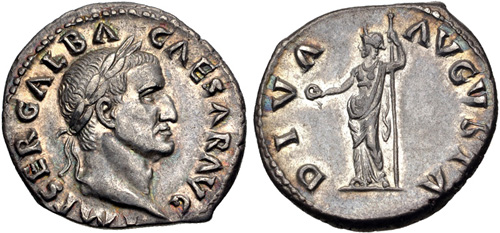
The White Horse
Galba
June 68 – January 69 AD
"I looked, and there before me was a white horse. Its rider held a bow, and he was given a crown, and he rode out as a conqueror bent on conquest." — Rev. 6:2
Galba rode into Rome as a conqueror after Nero's fall, crowned by the Senate as the new Caesar. He was presented as the restorer of order — the conquering ruler come to set things right. He held the bow of imperial authority. The white horse of legitimate imperial succession, riding out to claim the throne.
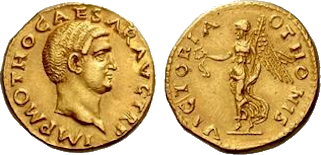
The Red Horse
Otho
January – April 69 AD
"Then another horse came out, a fiery red one. Its rider was given power to take peace from the earth and to make people kill each other." — Rev. 6:4
Otho seized power by having Galba assassinated — Roman soldiers killed their own emperor in the streets. Civil war erupted immediately. Roman legions fought each other across the empire. Peace was taken from the earth precisely as John described — men killing each other, the sword given to the red rider.
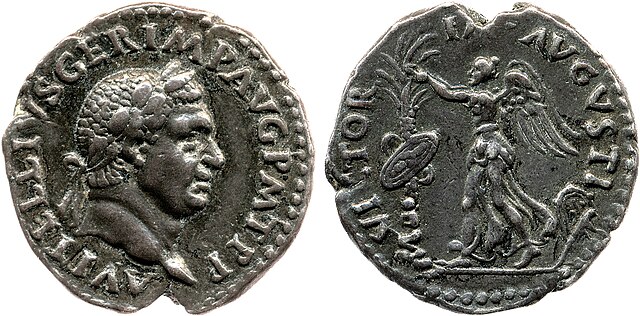
The Black Horse
Vitellius
April – December 69 AD
"I looked, and there before me was a black horse. Its rider was holding a pair of scales in his hand... A quart of wheat for a day's wages." — Rev. 6:5–6
Vitellius was historically documented for extreme gluttony — feasting extravagantly while the empire suffered. The scales of the black horse represent economic scarcity and rationing — the precise conditions of 69 AD as civil war disrupted grain supplies. A day's wages for a day's food: the economic collapse of a year of war.
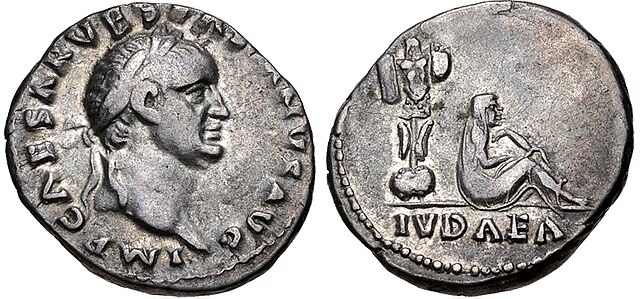
The Pale Horse
Vespasian / Death Itself
December 69 AD onward
"I looked, and there before me was a pale horse. Its rider was named Death, and Hades was following close behind him." — Rev. 6:8
The pale horse does not name an emperor — it names Death itself. Vespasian rose from the chaos to end the year of four emperors, but death followed in his wake: the destruction of Jerusalem in 70 AD, the siege and slaughter of the Jewish people. Note the reverse of his coin — IVDAEA — Judea conquered and mourning. Hades following close behind.
Galba. Otho. Vitellius. Vespasian. Four men bore the title Caesar in a single year. Four horsemen rode through the pages of Revelation. John's first readers did not need a commentary. They had lived it.
Roman historians Tacitus, Suetonius, and Cassius Dio all documented this year as the most catastrophic in Roman history to that point"After this I saw in the night visions, and behold a fourth beast, dreadful and terrible, and strong exceedingly; and it had great iron teeth: it devoured and brake in pieces, and stamped the residue with the feet of it: and it was diverse from all the beasts that were before it; and it had ten horns.
I considered the horns, and, behold, there came up among them another little horn, before whom there were three of the first horns plucked up by the roots: and, behold, in this horn were eyes like the eyes of man, and a mouth speaking great things."
Daniel 7:7–8 · Written approximately 550 BC · The fourth beast is Rome · The ten horns are CaesarsDaniel 7 describes a little horn that arises among ten horns — not before them, but out of their chaos. It subdues three of the other horns in its rise. Revelation 17:11 then says of the beast: "He belongs to the seven and is going to his destruction — yet he is an eighth." This is not a contradiction. It is a precise description of Vespasian's position in the sequence of Caesars.
Counting from Julius Caesar: Julius, Augustus, Tiberius, Caligula, Claudius, Nero — six Caesars. Then the year of four emperors: Galba, Otho, Vitellius — three more. Vespasian is the tenth horn who arises after the three are subdued. He belongs to the Caesar title — he is of the seven — yet in the sequence of the short chaotic succession he is the eighth to sit on Rome's throne after Julius. Daniel's little horn arising after the others and subduing three maps precisely onto Vespasian defeating the forces of Galba's supporters, Otho's legions, and Vitellius's armies to claim the throne.
Note the reverse of Vespasian's coin in this section: IVDAEA — Judea. Vespasian was the general who prosecuted the Jewish War and destroyed Jerusalem in 70 AD, leaving his son Titus to complete the siege. The little horn who spoke great words against the Most High — whose rise led directly to the desolation of the Temple — is memorialised on his own coinage with the name of the nation he destroyed. Daniel saw it. John confirmed it. The coin proves it.
"Then I would know the truth of the fourth beast, which was diverse from all the others, exceeding dreadful, whose teeth were of iron, and his nails of brass; which devoured, brake in pieces, and stamped the residue with his feet; And of the ten horns that were in his head, and of the other which came up, and before whom three fell; even of that horn that had eyes, and a mouth that spake very great things, whose look was more stout than his fellows. I beheld, and the same horn made war with the saints, and prevailed against them... And he shall speak great words against the most High, and shall wear out the saints of the most High, and think to change times and laws: and they shall be given into his hand until a time and times and the dividing of time."
Daniel 7:19–25 · KJV"A time, times and the dividing of time" — three and a half years. Nero's systematic persecution of Christians ran from the Great Fire of Rome in July 64 AD to his death in June 68 AD — precisely three and a half years. The little horn who made war with the saints and prevailed against them wore out the followers of Christ for exactly the period Daniel specified, written five and a half centuries before Nero was born.
"And after threescore and two weeks shall Messiah be cut off, but not for himself: and the people of the prince that shall come shall destroy the city and the sanctuary; and the end thereof shall be with a flood, and unto the end of the war desolations are determined."
Daniel 9:26 · KJVNotice the precision: it is not the prince himself who destroys the city — it is the people of the prince. Vespasian was called back to Rome to become emperor before the siege of Jerusalem was complete. His son Titus finished it. The people of Vespasian — his Roman legions under Titus — destroyed the city and the sanctuary in 70 AD exactly as Daniel prophesied. The desolation was determined. The coin marked IVDAEA is the receipt.
"And the king shall do according to his will; and he shall exalt himself, and magnify himself above every god, and shall speak marvellous things against the God of gods, and shall prosper till the indignation be accomplished: for that that is determined shall be done. Neither shall he regard the God of his fathers, nor the desire of women, nor regard any god: for he shall magnify himself above all."
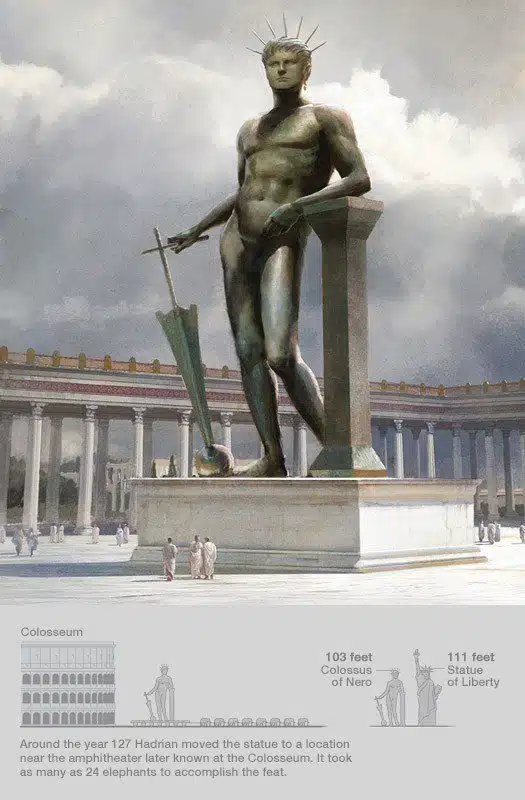
Daniel 11:36–37 · KJVNero was the first Roman emperor to demand worship as a living god during his own lifetime rather than posthumously. He had himself depicted as the sun god Sol Invictus — his Colossus stood at the entrance to his Golden House wearing the radiate crown of divine sovereignty. He "magnified himself above every god" in the most literal possible sense — erecting a 120-foot statue of himself as a deity in the heart of Rome. Daniel's description of the king who exalts himself above all gods is not metaphor. It is Nero's imperial policy.
"And here is the mind which hath wisdom. The seven heads are seven mountains, on which the woman sitteth. And there are seven kings: five are fallen, and one is, and the other is not yet come; and when he cometh, he must continue a short space. And the beast that was, and is not, even he is the eighth, and is of the seven, and goeth into perdition."
Revelation 17:9–11 · KJVThis passage locks the entire timeline. Counting Roman emperors from Augustus — the first to bear the full imperial title: Augustus, Tiberius, Caligula, Claudius, Nero — five have fallen. Galba — one is, reigning when John wrote. Otho — the other not yet come, who continued a short space (three months). And the beast who was, and is not — Nero — is the eighth in the broader sequence yet belongs to the seven Caesars. He "was" — he reigned. He "is not" — he is dead by the time of writing. Yet the Nero Redivivus legend meant the world believed he might return. The beast who was, and is not, and yet is.
Daniel and John are not writing separate prophecies about separate events. They are writing about the same sequence from different vantage points — Daniel from 550 BC looking forward, John from 65-68 AD looking at his present. Every horn, every king, every beast maps onto the same men. The fourth beast is Rome. The little horn is Vespasian. The beast whose number is 666 is Nero. The seven kings are the Caesars. The timeline is not open. It is closed. It was fulfilled.
The number 666 identifies Nero. But who were the people being warned? Christians — the communities to whom John was writing, already living under active persecution when Revelation was composed. Understanding what Nero specifically did to Christians gives Revelation's beast imagery its full weight. John was not writing theoretical theology about a future threat. He was describing the man currently killing his readers' friends and families.
In 64 AD, the Great Fire of Rome burned for six days. Nero needed someone to blame. He chose the Christians — a small, politically powerless group already viewed with suspicion by Roman society. What followed was the first systematic state persecution of Christians in history, documented by the Roman historian Tacitus in his Annals — a source hostile to Christianity and therefore all the more credible as a witness.
Nero fastened the guilt and inflicted the most exquisite tortures on a class hated for their abominations, called Christians by the populace... Mockery of every sort was added to their deaths. Covered with the skins of beasts, they were torn by dogs and perished, or were nailed to crosses, or were doomed to the flames and burnt, to serve as a nightly illumination, when daylight had expired. Nero offered his gardens for the spectacle.
Tacitus · Annals · Book XV · Chapter 44 · Written approximately 116 AD · Roman historian, not a ChristianTacitus — writing as a Roman historian with no sympathy for Christianity — documents Nero using Christians as living torches to illuminate his gardens at night. This is not Christian tradition or hagiography. This is Roman documentation of what the beast did to the people John was writing to protect.
Christians were sewn into animal skins and released into arenas where dogs were set upon them. This was public entertainment — the beast demanding that the empire watch and participate in the destruction of those who refused to worship him.
Nero crucified Christians — the same method used to execute their Lord forty years earlier. For a Roman audience this carried specific meaning: criminals and enemies of the state. The beast used the cross as an instrument of mockery as well as execution.
Christians were coated in pitch and set alight as torches to illuminate Nero's garden parties at night. Tacitus documents this as a spectacle — the emperor entertaining guests while Christians burned. This is the man whose name calculates to 666.
This was not random violence — it was organized state persecution targeting Christians specifically as a group. It established the template that later emperors would follow. Nero was the first Caesar to make the killing of Christians official Roman policy.
When John wrote "let him who has understanding calculate the number of the beast" — he was writing to people whose families had been burned alive in Nero's garden. They did not need to be told who the beast was. They needed to be told that God saw it, that it was prophesied, that it had an end. Revelation was not written to frighten people about a distant future. It was written to strengthen people living through a present horror — and to tell them that the beast whose number is 666 was already under judgment.
"One of the heads of the beast seemed to have had a fatal wound, but the fatal wound had been healed. The whole world was filled with wonder and followed the beast."
Revelation 13:3
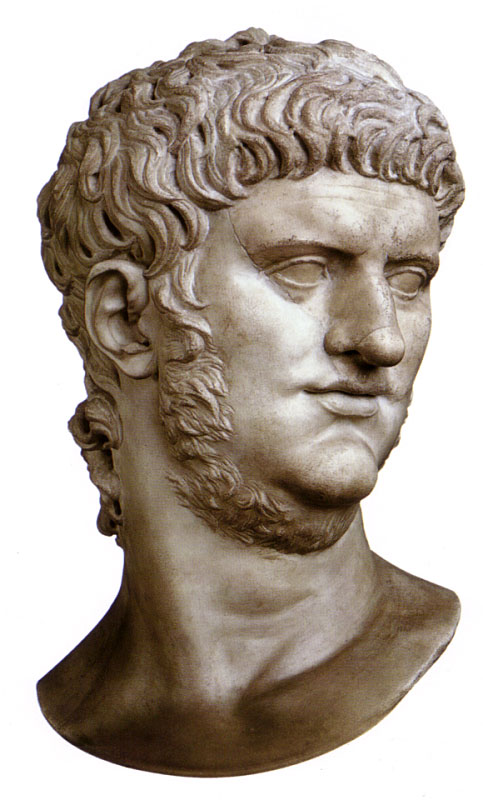
Nero Caesar · Emperor of Rome · 54–68 AD
Bust · Pushkin State Museum of Fine Arts
Revelation 13:3 describes one of the beast's heads receiving what appeared to be a fatal wound — only to be healed, causing the world to marvel. The historical record of Nero's death is precisely this scenario played out in real time across the Roman empire.
At the Olympic Games of 67 AD, Nero entered a chariot race pulled by ten horses — far more than any other competitor. He was thrown from the chariot partway through the race and could not finish. By any legitimate standard of competition he had lost. The judges nevertheless declared him the winner. The man who could not complete his own race was crowned victor because no one in the empire dared tell Nero Caesar he had lost. The absurdity of this moment — the most powerful man on earth declared winner of a race he could not finish — captures the precise character of the beast who demanded worship regardless of reality.
In June 68 AD, Nero fled Rome as the Senate declared him a public enemy. He died by suicide — or was helped to die — by a sword wound to the throat. But the manner and even the fact of his death were immediately disputed across the empire. The Nero Redivivus legend — the belief that Nero had survived or would return — spread rapidly and persisted for decades. Multiple false Neros arose claiming his identity. The wound that appeared fatal was, in the popular imagination of the Roman world, healed. The world did not know with certainty that the beast was dead.
John's first-century readers would have understood this reference immediately. The head wound that appeared fatal yet healed — the Nero who disappeared and might return — was the defining political anxiety of the late first century. It was not a prophecy about a future antichrist with a gunshot wound. It was a description of their present political reality.
The Olympic chariot race episode is one of the most extraordinary documented moments in Roman imperial history — and one of the most precise parallels to the beast of Revelation 13. Every detail from the ancient sources illuminates the text.
Nero entered the chariot race at Olympia with a team of ten horses — far exceeding the standard four-horse team. No other competitor challenged the entry. The judges, the crowd, and the other athletes all understood that the outcome was decided before the race began. The emperor had declared himself the entrant. The emperor would win.
Nero was thrown from the chariot during the race. He was helped back into it by attendants — but could not complete the course. By any legitimate athletic standard he had not finished the race. The wound that should have ended his victory was visible to everyone present. The entire stadium watched the beast fail to complete his own race.
The judges declared Nero the winner regardless. He was awarded the olive crown for a race he did not finish. The wound was officially healed. The world marveled — not in admiration but in the particular wonder that comes from witnessing absolute power override reality itself. This is precisely what Revelation 13:3 describes.
The chariot race is a compressed image of everything the beast represents. A man who could not complete his race was declared its winner. A man who died by a sword to the throat was believed by many to have survived. A man who demanded to be worshipped as a god was called Lord and Saviour throughout the empire. Reality was what Nero declared it to be. This is the spirit of antichrist — the claim to authority over reality itself that belongs only to God.
"It exercised all the authority of the first beast on its behalf, and made the earth and its inhabitants worship the first beast... It performed great signs, even causing fire to come down from heaven to the earth in full view of the people... It ordered them to set up an image in honor of the beast who was wounded by the sword and yet lived. The second beast was given power to give breath to the image of the first beast, so that the image could speak and cause all who refused to worship the image to be killed."
Revelation 13:12–15The false prophet — the second beast — is the Roman imperial cult apparatus: the priests, temples, and imperial theology that demanded worship of the emperor throughout the empire. Three specific functions are described in Revelation 13, and all three have precise historical parallels in the first century.
The imperial cult priests performed elaborate ceremonies including fire displays in the temples. More significantly, Simon Magus and other figures operating during the Neronian period were documented as performing "great signs" in the presence of imperial authority — claiming miraculous power to legitimate the emperor's divine status. The false prophet's signs were real events witnessed by real people in the first century.
The mark of the beast — charagma in Greek — is the precise word used in the Roman world for the imperial stamp or brand required on commercial documents and transactions. Without it you could not buy or sell in Roman-controlled commerce. Roman subjects were required to sacrifice to the emperor's image before conducting business. The tattoo or brand identifying you as a loyal subject of Caesar was the economic gateway to participation in the Roman system.
Nero erected a colossal bronze statue of himself — the Colossus Neronis — at the entrance to his Domus Aurea palace. Ancient sources describe mechanisms by which statues in temples appeared to speak or move — ventriloquism and mechanical devices documented by Roman writers. The image of the beast that could speak and demand worship under penalty of death is the imperial cult statue apparatus of the first century. The demand was real. The penalty for refusal was real.
The mark of the beast was fulfilled in the first century under Nero — an economic compliance system tied to religious allegiance, without which you could not participate in Roman commerce. But as Layer IV documents, the same principality that ran the first-century system through Nero is running a recapitulated version through the CBDC infrastructure being built right now. Same architecture. Better technology. Same spiritual author.
"It also forced all people, great and small, rich and poor, free and slave, to receive a mark on their right hands or on their foreheads, so that they could not buy or sell unless they had the mark."
Revelation 13:16–17 — Fulfilled under Nero · Recapitulated in the Short SeasonThe preterist reads this as fulfilled. The short season reader asks: why is this system being rebuilt? If Satan is released for a short season and his primary activity is deception — if he is running a recapitulation of the tribulation sequence to make people look forward for what already happened — then rebuilding the mark architecture is exactly what you would expect. Not because Revelation 13 has a future fulfillment. Because the same principality runs the same plays. The CBDC system is not the fulfillment of an unfulfilled prophecy. It is the Kosmokrator running his favourite move again.
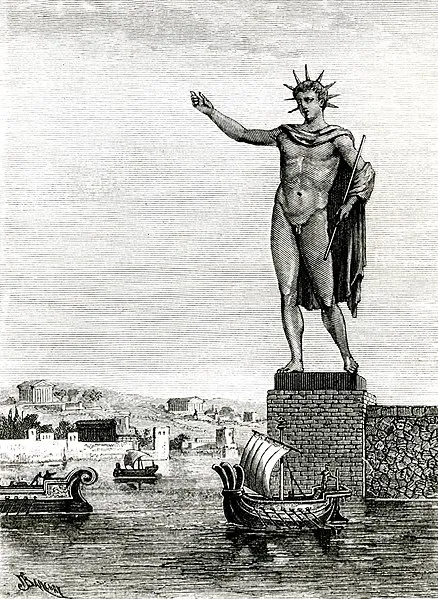
The following visual comparison is presented as a speculative but documented observation. Three massive harbour statues across history share the same crown — the radiate crown of Sol Invictus, the unconquered sun, the crown worn by the deified ruler claiming to be the god of this world. The connection between the ancient colossi and the modern one is documented in the historical record of Bartholdi's own design process and the Masonic symbolism of the dedication ceremony.
280 BC
64 AD
1886 AD
The radiate crown — seven rays emanating from the head — was the crown of the sun god Helios in the Greek world and Sol Invictus in the Roman world. It identified the wearer as the earthly manifestation of divine solar power. The Colossus of Rhodes wore it as Helios. Nero had himself depicted wearing it as Sol Invictus — the divine emperor. The Statue of Liberty wears a crown of seven rays — the same radiate crown, the same solar symbolism, designed by a documented Freemason who understood exactly what he was building. Bartholdi's own writings reference the Colossus of Rhodes as his inspiration. The plaque inside the pedestal is titled The New Colossus. The connection is not speculative — it is documented in Bartholdi's own words.
Here is the observation that connects everything on this page to the short season thesis. Every ancient colossal statue of a deified ruler — the Colossus of Rhodes, the Colossus of Nero, the countless naked emperors depicted as gods throughout the Roman world — depicted the ruler unclothed. The nakedness was not artistic convention. It was theological declaration. The god of this world had nothing to hide. He ruled openly. He demanded worship brazenly. He stood naked in the harbour and said: I am the sun. I am the god. Submit or die.
The ancient rulers erected naked statues because they were not deceiving anyone about their intentions. They declared openly that they were gods. The Colossus of Rhodes stands naked at the harbour declaring the sovereignty of Helios. The Colossus of Nero stands naked at the palace entrance declaring that Nero is Sol Invictus, the sun incarnate. The nakedness says: look at what I am. I rule. I am divine. You will worship me or you will die. There is no pretence of freedom. There is no robe of liberation. There is simply raw, naked, divine authority claimed openly.
This is what Paul describes in 2 Corinthians 4:4 — the god of this age operating without concealment. His dominion was visible. His demand was clear. His nature was undisguised.
The Statue of Liberty wears a robe. This is the single most significant visual difference between the ancient colossi and the modern one — and it is theologically exact. Revelation 20:3 says Satan was bound so that he could not deceive the nations. His binding is not the end of his existence — it is the end of his ability to operate openly. When he is released for the short season, deception is his primary weapon. He cannot stand naked in the harbour and demand worship. He must wear a robe. He must call the torch enlightenment. He must call the chains broken rather than loosed.
The Statue of Liberty is the short season's version of the Colossus of Nero. Same crown. Same harbour. Same torch. Same spiritual author. But now it wears a robe — because the god of this age is operating under deception, not open declaration. The robed statue is the most visible monument to the short season ever constructed. And the world calls it beautiful.
"And he seized the dragon, that ancient serpent, who is the devil and Satan, and bound him for a thousand years, and threw him into the pit, and shut it and sealed it over him, so that he might not deceive the nations any longer, until the thousand years were ended. After that he must be released for a little while."
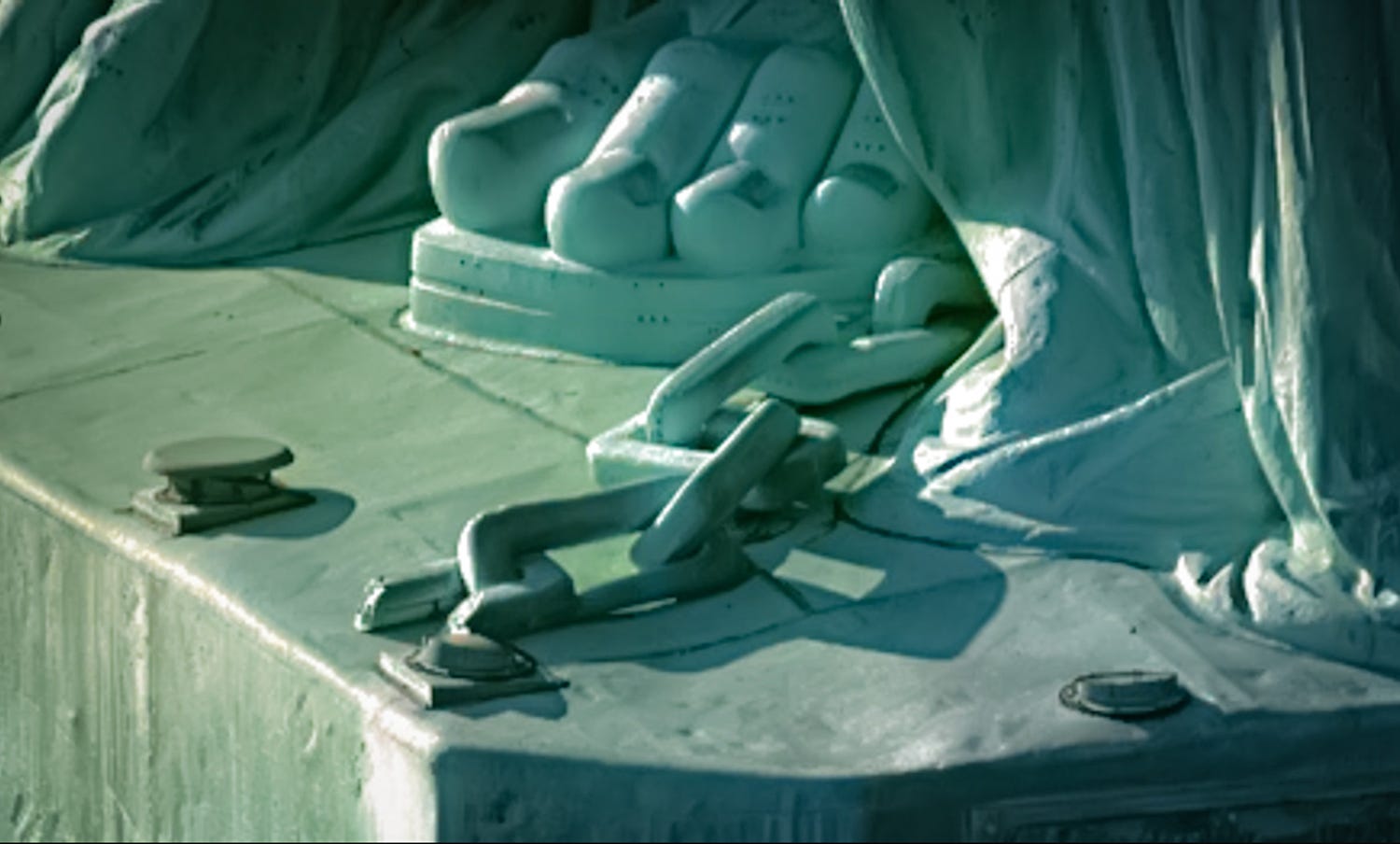
Revelation 20:2–3 — The binding and the release · The broken chain at Liberty's feet is Satan's freedom — not humanity'sAt the feet of the Statue of Liberty lie broken chains. We have been told these represent freedom from slavery — the liberation of the oppressed. But look at what stands above them: a robed figure wearing the radiate crown of the sun god, holding a torch of illumination, standing at a harbour entrance, built by a Freemason as a gift from French Masonic lodges to American Masonic lodges, dedicated in a Masonic ceremony, explicitly named The New Colossus by the plaque inside its pedestal.
The broken chains at Liberty's feet are Satan's chains. The chain of Revelation 20:2–3 has been broken. The short season has begun. The god of this age is no longer bound — and the monument announcing his freedom stands in the harbour of the world's financial capital, robed in the language of liberation, wearing the crown of the sun god he has always been. The whole world looks at it and calls it beautiful. The whole world has been deceived.
The monument and its message — displayed together at the entrance to the financial capital of the world
"It is easier to fool people than to convince them that they have been fooled."
Attributed to Mark Twain
The attribution is widely accepted though the exact source is debated — which is itself fitting.
Nero is gone. The Roman imperial cult is gone. But the principality that animated both is not. The same Kosmokrator that operated through Nero's demand for worship operates through the financial control systems being built now. The same spirit that erected naked colossi declaring open divine authority now erects robed ones declaring freedom. The beast changes faces. The spirit does not. And the one who defeated the spirit at the cross has not changed either.
Layer IV — The Prophetic Map Layer V — The Historical Record